ACM-IAU France Spring 2026
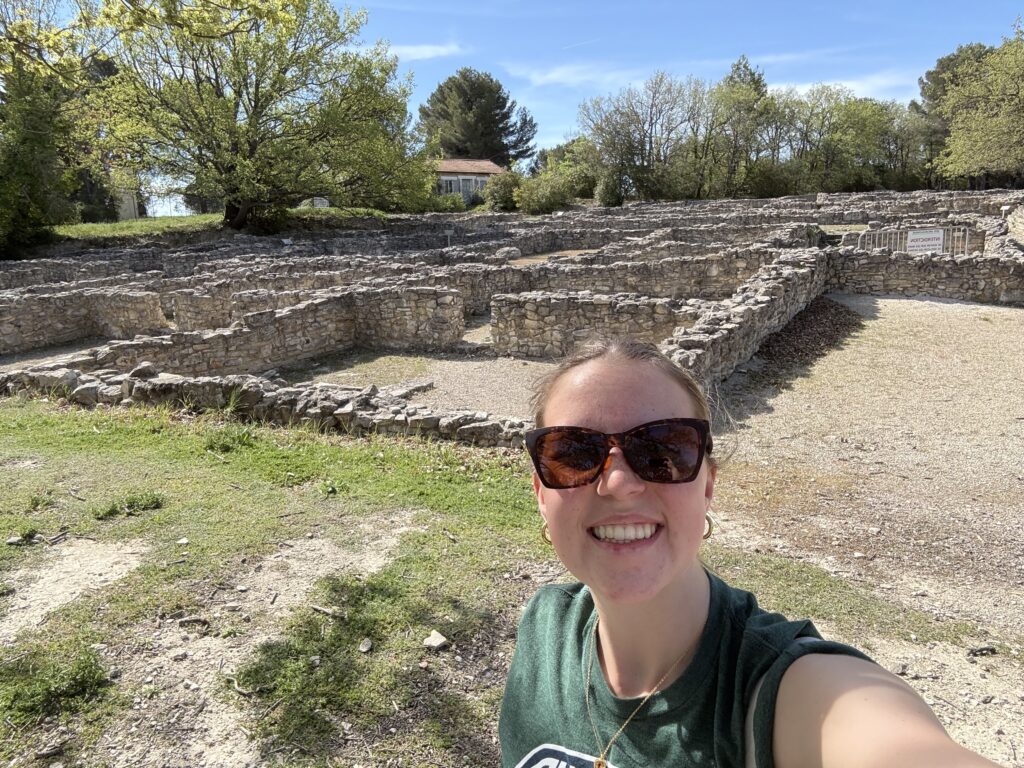
In 175 BCE, the Celtic/Ligurian village of Entremont was born atop the hill towering over a valley of natural springs. It was a quaint but self-sustaining community. With aquifers beneath the people’s very feet and plenty of space for rows of crops to the east, the townspeople were able to grow their own food and pull water so clear from the ground, it sparkled with the sun. Life was comfortable in the ways it could be. Trade with the northern villages occurred only out of necessity, each community looking out for its own. Years passed in this quiet rhythm…
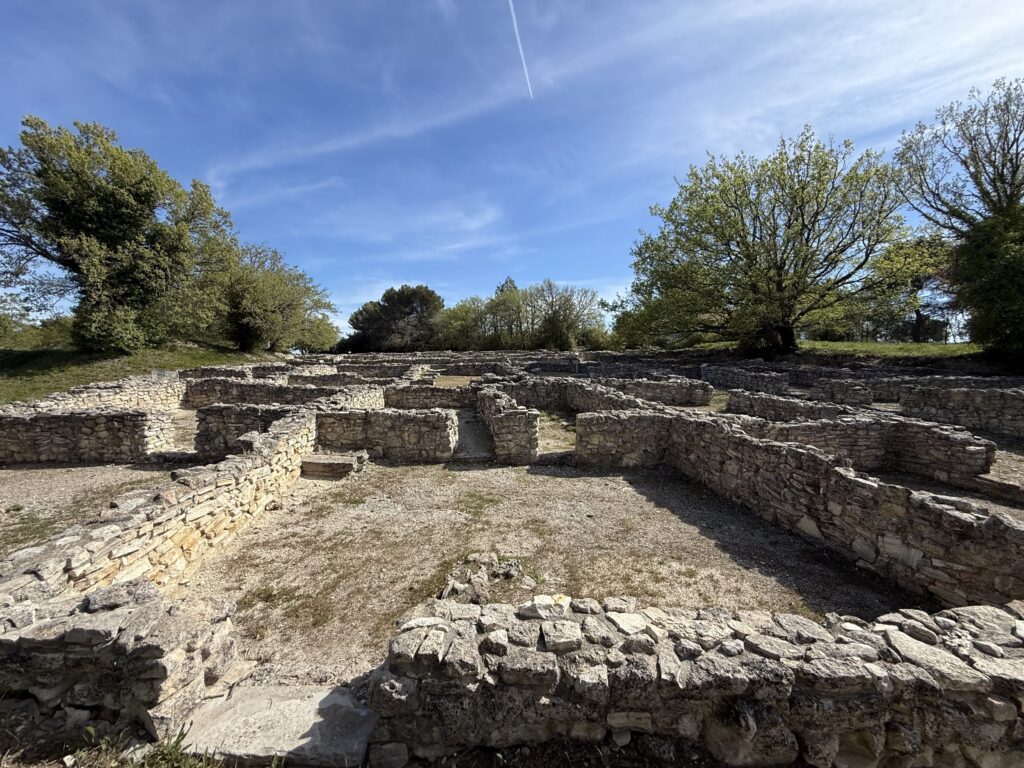
It was a beautiful morning in 123 BCE; children running about town helping their families, the community working in perfect symmetry. All was quiet, peaceful even. The eastern fields hummed with the quiet energy of farmers tending to their crops before the sun grew too hot, scorching the open earth. It was the man on the fields edge, closest to the hills slope, that felt it first: a vibration underfoot. The feeling spread like wildfire, racing up the tilled rows and winding through the narrow streets until it gripped every building. Suddenly, the dirt and dust that formed the floor of each house rose a centimeter off the ground, swirling in eerie unison. Then came the sound: the heavy pounding of feet and the sharp click-clack of hooves shattering the silence of southern France. The man looked to his left as silhouettes began to crest the slope, a massive line merging into an advancing force at least a hundred strong. The Romans had arrived. Clad in short functional tunics underneath heavy armor, their bodies were protected by the chainmail lorica hamata and bronze galea helmets. A single man stepped forward from the army that had amassed. His name was Gaius Sextius Calvinus, a consul of the Roman Republic. He stood at the edge of the slope, taking one long look at the gathered people before him, their primitive homes, and their modest fields. The village was tiny; its total area would barely take up a fifth of the great Coliseum back home. His upper lip curled into a disgusted snarl. His teeth parted to utter a single word:
“Barbarians.”
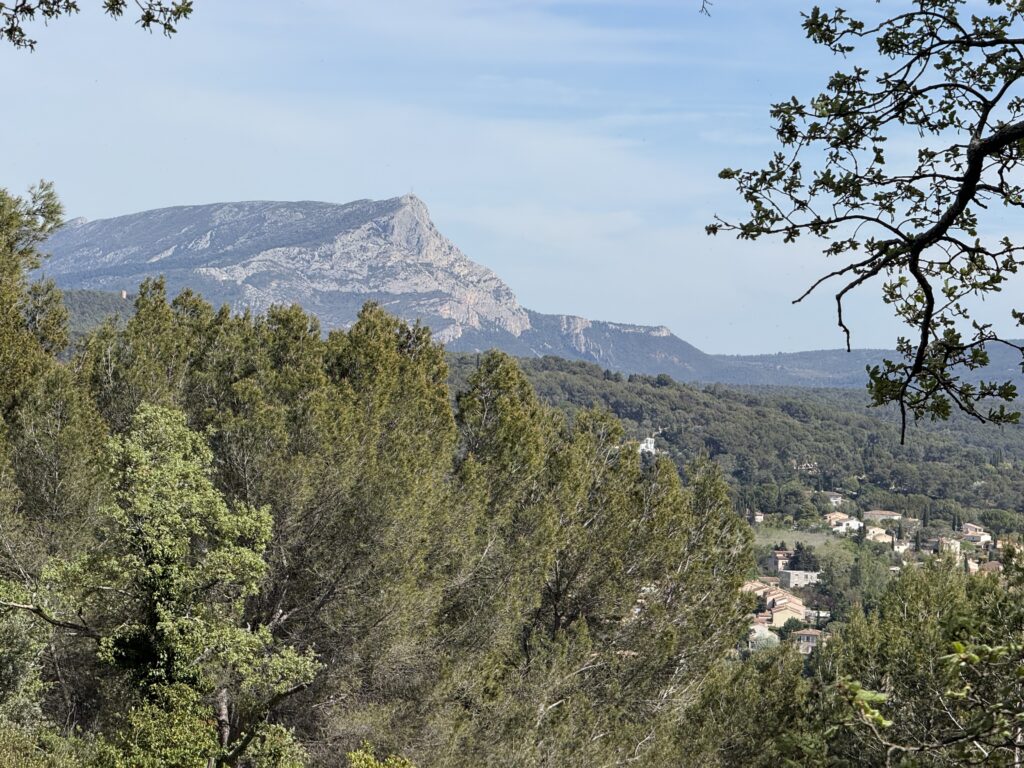
It was during this period that the Roman Republic was aggressively continuing its imperial expansion westward. As the Romans rounded up the local Celtic and Ligurian tribes and took over the small settlement, they quickly realized what a strategic jewel they had stumbled across. The high, isolated oppidum of Entremont was abandoned altogether, and down in the fertile valley below—where natural thermal springs flowed and major Mediterranean travel routes intersected—the Romans established a new settlement. They named it Aquae Sextiae (the Waters of Sextius), which the world knows today as Aix-en-Provence.
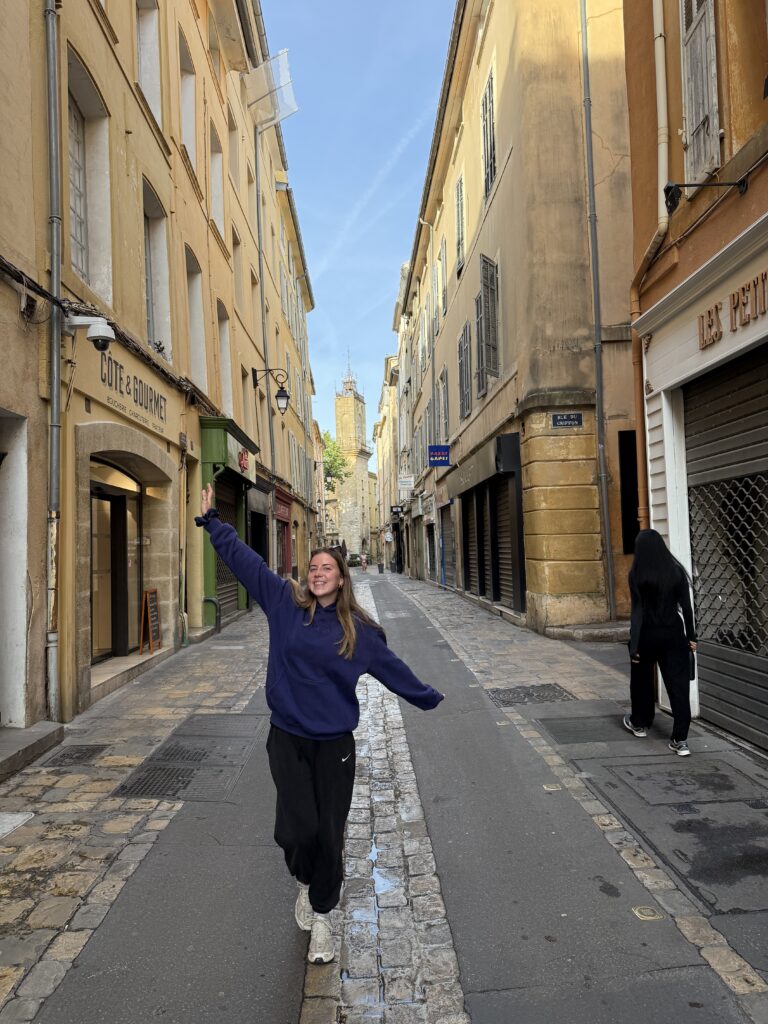
More than two thousand years after Gaius Sextius Calvinus looked down upon that valley, I found myself walking through it. In Spring 2026, I spent four months living and studying in Aix-en-Provence, France, at the American College of the Mediterranean through IAU.
My experience in France was truly life-changing. Studying abroad opens your eyes and expands your knowledge of the world in ways that are difficult to replicate in any other setting. It exposed me to layers of culture, history, and perspectives that I had never encountered so directly before. Through courses like Mediterranean Identities and Food Culture, I learned how migration, community, food, and deep-rooted history shape people’s identities and lived experiences.
Being based in Aix-en-Provence—about 30 minutes from the Mediterranean Sea and near the ancient port city of Marseille—added another incredible layer to that learning.
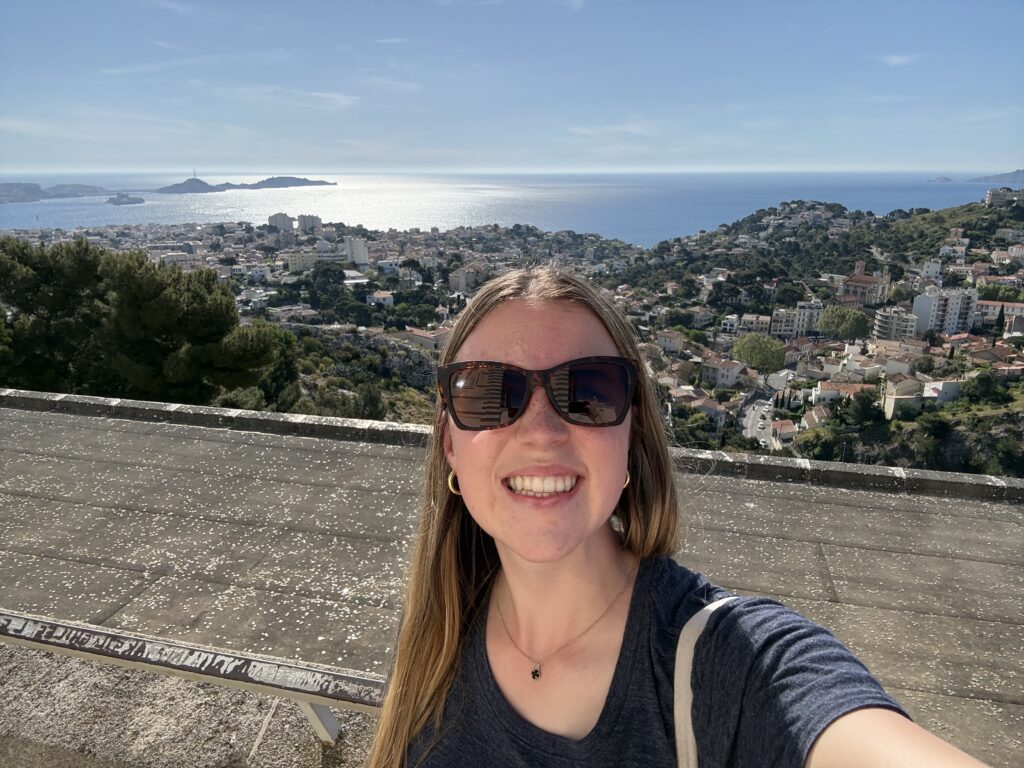
Marseille, the second-largest city in France, is often described as a “melting pot of the Mediterranean basin,” much like the United States is referred to as a cultural melting pot. It carries a long, complex history of migration across the sea, bringing together vibrant communities from North Africa, the Middle East, and European neighbors like Greece, Italy, and Spain. Through my coursework, we studied these intersecting cultures and their modern significance, gaining a deeper appreciation for the ways identity and belonging are shaped across the region.
Please come along with me as I showcase some of my research, photographs, and projects that gave me these deeply impactful experiences.
Mediterranean Identities: https://cgudroe.uneportfolio.org/mediterranean-identities/
French Food Culture: https://cgudroe.uneportfolio.org/french-food-culture/
Photography: https://cgudroe.uneportfolio.org/photography/
The French Language: https://cgudroe.uneportfolio.org/the-french-language/
